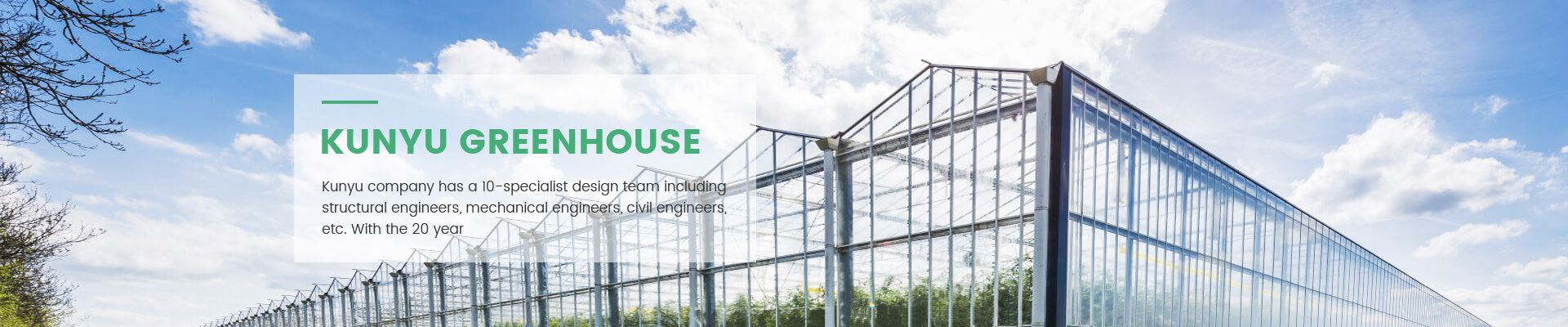
A Venlo greenhouse is a high-tech, multi-span glass greenhouse originally developed in the Netherlands. It is specifically designed for commercial-scale crop production, offering excellent light transmission, strong structural stability, and efficient climate control.
Named after the Venlo region in the Netherlands—one of the world’s most advanced horticultural areas—the Venlo greenhouse has become a global standard for modern greenhouse farming, especially for vegetables, flowers, and high-value crops.
Today, Venlo greenhouses are widely used in Europe, North America, the Middle East, Asia, and other regions where precision agriculture and high yields are required.
The Venlo greenhouse concept emerged in the mid-20th century in the Netherlands. Dutch growers faced challenges such as:
Limited land resources
High labor costs
Unstable weather conditions
To maximize production per square meter, they developed a greenhouse structure that could:
Transmit maximum sunlight
Support advanced automation systems
Withstand strong wind and snow loads
Over decades of improvement, the Venlo greenhouse evolved into a highly standardized modular system, making it easier to scale, customize, and maintain.
Venlo greenhouses consist of multiple connected spans, allowing large cultivation areas without internal obstructions. This design improves space utilization and supports mechanized operations.
Most Venlo greenhouses use tempered glass (typically 4mm or 5mm thick), which offers:
High light transmission (up to 90%+)
Long service life (20–30 years)
Excellent resistance to aging and UV degradation
The roof features a gable (A-shaped) design with standardized roof widths (commonly 3.2m or 4.0m). This allows:
Efficient rainwater drainage
Natural ventilation through roof vents
Even light distribution inside the greenhouse
The main structure is made from hot-dip galvanized steel, ensuring:
High corrosion resistance
Long lifespan in humid environments
Compliance with international structural standards
This makes Venlo greenhouses suitable for long-term commercial investment.
Glass covering and optimized roof angles allow maximum sunlight penetration, which is critical for photosynthesis and crop yield.
Venlo greenhouses support advanced systems such as:
Automatic ventilation
Heating and cooling systems
Shading and energy-saving screens
CO₂ enrichment
This creates a stable growing environment regardless of external weather conditions.
Thanks to precise environmental control, Venlo greenhouses enable:
Year-round production
Faster crop cycles
Higher output per square meter
This significantly improves return on investment (ROI) for commercial growers.
Designed to meet European standards, Venlo greenhouses can withstand:
Strong winds
Heavy snow loads
Extreme temperature variations
This makes them suitable for various climate zones worldwide.
Venlo greenhouses are mainly used for high-value and intensive crops, including:
Tomatoes
Cucumbers
Bell peppers
Lettuce and leafy greens
Strawberries
Flowers (roses, gerbera, tulips)
Seedling and nursery production
They are particularly popular in large-scale commercial greenhouse projects and agricultural industrial parks.
| Feature | Venlo Greenhouse | Tunnel Greenhouse |
|---|---|---|
| Covering | Glass | Plastic film |
| Lifespan | 20–30 years | 3–5 years |
| Climate Control | Advanced | Limited |
| Investment | Higher | Lower |
| Suitable for | Commercial farming | Small-scale farming |
While polycarbonate greenhouses offer better insulation, Venlo greenhouses provide higher light transmission, making them ideal for crops requiring intense sunlight.
Venlo greenhouses are highly adaptable and can be customized for different climates:
Cold regions: Equipped with heating systems and thermal screens
Hot regions: Integrated with cooling pads, fans, and shading systems
High humidity areas: Advanced ventilation and dehumidification
With proper engineering design, Venlo greenhouses can operate efficiently in almost any climate.
The cost of a Venlo greenhouse depends on several factors:
Greenhouse size and span configuration
Glass thickness and type
Steel structure specifications
Climate control and automation systems
Local labor and installation costs
On average, Venlo greenhouses have a higher initial investment compared to plastic greenhouses. However, their long lifespan, lower maintenance costs, and higher yields often result in better long-term profitability.
For professional growers and agricultural investors, Venlo greenhouses offer:
Stable and predictable production
High-quality crop output
Compatibility with smart agriculture systems
Long-term operational reliability
They are especially suitable for projects targeting export markets or high-end retail chains where consistent quality is essential.
A Venlo greenhouse is ideal if you:
Plan to operate a commercial-scale greenhouse
Grow high-value crops year-round
Require precise environmental control
Aim for long-term agricultural investment
If your goal is maximum efficiency, scalability, and sustainability, the Venlo greenhouse is one of the best solutions available.
The Venlo greenhouse represents the gold standard of modern greenhouse technology. Its advanced design, durability, and productivity make it a top choice for commercial agriculture worldwide. While the initial investment may be higher, the long-term benefits in yield, quality, and operational efficiency make it a smart and sustainable option for serious growers.
By understanding what a Venlo greenhouse is and how it works, you can make more informed decisions for your greenhouse project and achieve higher returns in modern agriculture.

Copyright ©Kunyu Greenhouse Co., Ltd. All Rights Reserved | Sitemap