
"What is the most profitable greenhouse farming?" This is a question we hear daily from modern farmers and investors like you. However, the real answer might surprise you: There is no single "most profitable" greenhouse model or crop. Maximum profitability doesn't come from simple copy-pasting but from a meticulously designed system—one that cleverly solves the climate challenges of your specific location, precisely meets market demand, and efficiently utilizes technology and resources.
This article will serve as your ultimate guide, taking you beyond the surface to explore the various dimensions that constitute "the most profitable greenhouse farming." We will help you understand how to make the smartest choices based on your unique conditions.
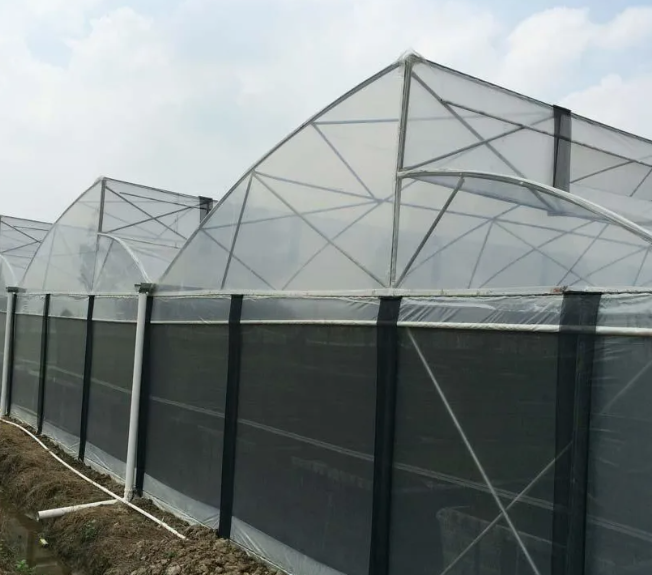
Before you agonize over planting tomatoes or orchids, first establish a holistic framework. Profitability is determined by multiple interlocking gears:
Climate Adaptability: Can your greenhouse effectively withstand local extreme weather? Is winter insulation more critical, or is summer cooling and dehumidification more urgent? This directly determines your energy costs and crop survival rate.
Operational Costs: Includes energy (heating/cooling), labor, water, fertilizers, and seedlings. A high-tech greenhouse might have high output, but if energy costs spiral out of control, profits will be eaten up.
Market Demand & Price: Growing high-value crops that are scarce and in high demand locally typically yields higher profits than staple crops.
Technology & Efficiency: Automation, intelligent control systems, and soilless cultivation can significantly increase yield and quality while reducing labor and resource waste.
Initial Investment & Payback Period: You must choose a greenhouse type that matches your budget and clearly understand its return on investment (ROI) timeline.
The most profitable greenhouse is the one that finds the optimal balance among these factors.
2. Greenhouse Type Showdown: Finding Your Starting Point for Profit
Different greenhouse structures represent different investment levels and profit models.
1. Venlo-Type Glass/PC Board Greenhouses (The High-Tech Path)
The benchmark of modern protected agriculture. Employs automated environmental control, supplemental lighting, CO₂ fertilization, and soilless cultivation systems.
Profitability: Extremely high. Enables year-round production, highest yield per unit area, and allows precise quality control for supplying high-end markets.
Best Scenario: Well-funded investors, corporate operations, targeting high-end supermarkets in tier-one cities, export markets.
Challenges: Very high initial investment, requires highly skilled technical management.
2. Chinese Solar Greenhouses (The Wisdom of Northern China)
One of the most outstanding solutions for the cold climate of Northern China. Its thick insulated north wall and south-facing glazed surface maximize solar energy absorption and storage, while insulation quilts cover it at night to minimize heat loss.
Profitability: Very high, the king of cost-effectiveness. Requires little to no additional heating for winter production of warm-season vegetables, drastically reducing the biggest cost item—winter energy expenditure. Perfectly solves the climate challenge of "overwinter production."
Best Scenario: Individual farmers or cooperatives in cold, sunny regions of Northern China.
Challenges: Summer cooling needs attention, relatively lower land use efficiency.
3. Polytunnel/Multi-Span Film Greenhouses (Flexible and Practical Choice)
The most common type of greenhouse, low-cost, and quick to build.
Profitability: Good. Allows for extending the growing season (early spring/late autumn) to fetch higher off-season prices. Low investment risk, fast returns.
Best Scenario: Beginners, farmers with limited capital, suitable for spring/autumn seedling cultivation or crops less sensitive to environmental conditions.
Challenges: Weaker resistance to extreme weather (heavy snow, strong winds), poor precision in environmental control.
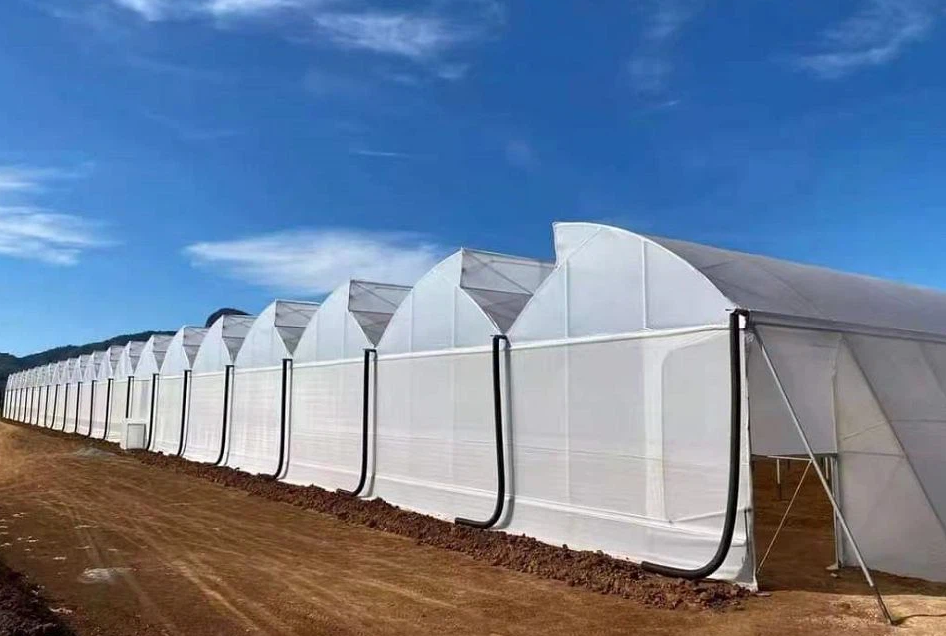
This is the focal point of your concerns. The core value of a greenhouse lies in its "controllability," transforming climate problems into business opportunities.
Tackling Cold: Solar greenhouses and glass greenhouses with heating systems allow you to grow tomatoes and cucumbers in the harsh winter, when prices are often 2-3 times higher than in summer.
Tackling Heat & Strong Light: Using external shade systems and fan-pad cooling systems, you can create a cool "summer retreat" for crops, preventing sunscald, growth stagnation, and ensuring summer quality.
Tackling Drought & Heavy Rain: A greenhouse is a closed system, where irrigation water efficiency can reach over 90%, 2-3 times higher than open-field irrigation. It also protects crops from physical damage due to heavy rain/hail and diseases caused by excessive moisture.
Tackling Pests & Diseases: Insect screens and an isolated environment drastically reduce pest invasion and pathogen spread, significantly lowering pesticide costs and providing a foundation for producing green or organic food.
When selecting crops, follow the principle: "What is scarce and expensive in my local market is what I should grow."
Fruit Vegetables: Cherry tomatoes, bell peppers, cocktail cucumbers are perennial high-profit choices. Diverse varieties, stable market demand.
Leafy Greens: Lettuce (especially romaine, butterhead, etc.), arugula, ice plant – demand is booming in urban restaurants and supermarkets for salads. Short growth cycle, allows for multiple harvests.
Specialty Fruits: Strawberries (elevated soilless culture), melons, raspberries – extremely high value for agritourism (pick-your-own) and high-end retail.
Herbs: Basil, rosemary, mint – high value per unit, highly popular in the food service industry.
Flowers: Cut roses, lilies, potted flowers – huge profit margins during holidays.
Key Tip: Before deciding, visit your local wholesale market, high-end supermarkets, and restaurants to understand what sells well and what is in short supply.
Soilless Culture: Hydroponics, coconut coir cultivation, etc., not only prevent soil-borne diseases but also enable precise fertilization through integrated water-fertilization systems, saving water and fertilizer by over 30% and increasing yields by 20%-50%.
Intelligent Environmental Control: Sensors monitor temperature, light, humidity, and CO₂ in real-time, linking with systems like roof vents, shades, and irrigation. Enables automated management, reduces human error, and saves labor.
Supplemental Lighting: During winter with short daylight hours, LED grow lights ensure sufficient photosynthesis for crops, maintaining high and stable yields.
Finally, pragmatic business planning is the crucial final step.
Cost Calculation: Detail the initial investment and annual operational costs.
Market Channels: Who will you sell to? Wholesalers, farmers' markets, direct supermarket supply, restaurant contracts, or agritourism (pick-your-own)? Different channels have completely different requirements for varieties, quality, and quantity.
Start Gradual: If you are a beginner, start with a few polytunnels, gain experience and capital, and then gradually upgrade to more advanced greenhouses.
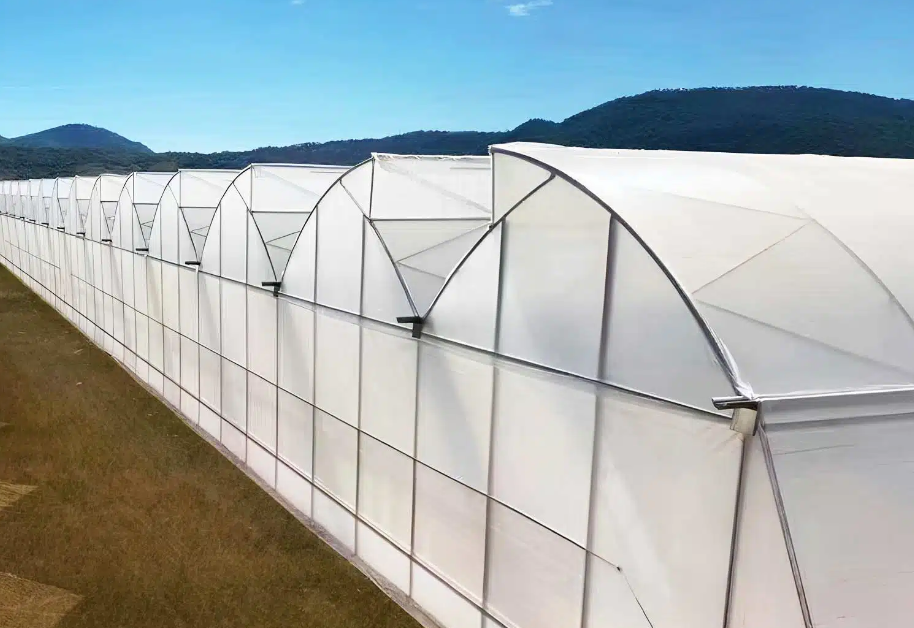
Returning to the initial question, "What is the most profitable greenhouse farming?" The answer is now clear: It is a comprehensive system that integrates a greenhouse structure suited to your local climate, high-value crops with market demand, and modern agricultural technologies that reduce costs and increase efficiency.

Copyright ©Kunyu Greenhouse Co., Ltd. All Rights Reserved | Sitemap