
Introduction: The New Era of Agriculture
Remember the days when we were powerless against the weather? An unexpected late frost could wipe out an entire crop of seedlings overnight. A prolonged heatwave could scorch fruits and slash yields. A sudden gust of wind was enough to destroy a year's worth of effort. The age-old challenge of "farming by the heavens" was the greatest source of uncertainty for countless growers.
But times have changed. Modern agriculture is no longer a passive "vulnerable industry" but has evolved into a proactive "tech industry." At its heart, the greenhouse is far more than a simple tool for extending growing seasons. In the face of increasingly frequent extreme weather, a scientifically designed, intelligently equipped modern greenhouse is the ultimate solution for taking control of production and finally saying goodbye to the unpredictability of nature.
This article will provide an in-depth analysis of how greenhouse systems methodically address the three major challenges of extreme heat, cold snaps, and high winds, showcasing the "technological defense system" of modern protected agriculture.
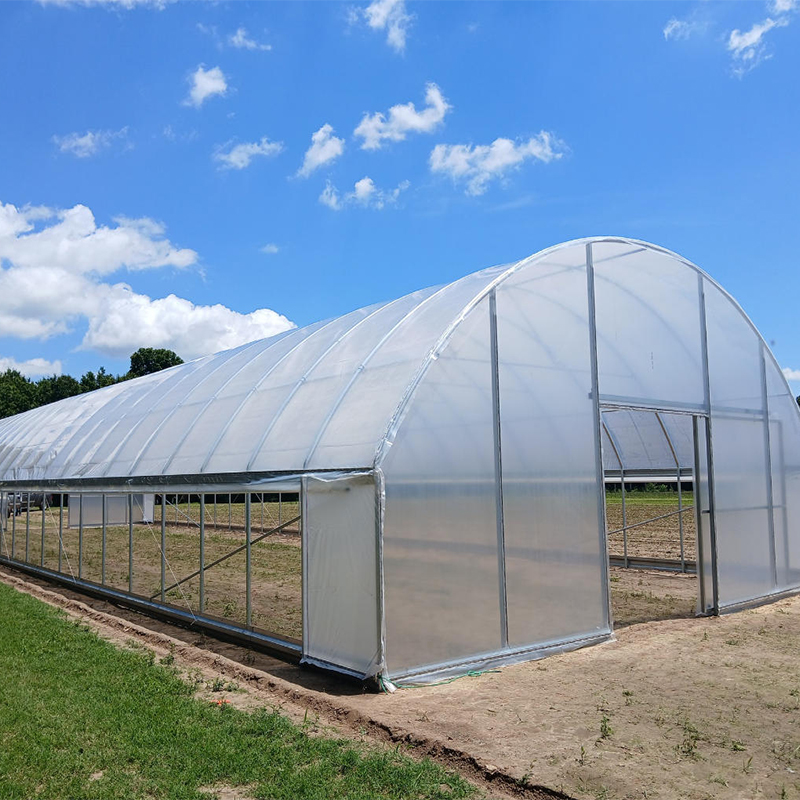
When the outdoor temperature soars and traditional field crops wither, is the inside of your greenhouse turning into an oven? Extreme heat hinders photosynthesis, inactivates pollen, causes sunscald, and can even kill plants outright. A modern greenhouse's cooling system is a multi-dimensional, integrated effort.
1. Active Cooling: Installing "Air Conditioning" for Your Greenhouse
External Shade Nets: The First Line of Defense
This is the most direct and effective cooling method. Deployable shade nets over the greenhouse roof can block 30%-70% of direct solar radiation, reducing heat at the source. Advanced systems open and close automatically based on light sensor data, providing perfect shade at midday while retracting on cloudy days to ensure sufficient light.
Fan-Pad Cooling Systems: The "Core Technology" of Evaporative Cooling
This system is renowned as the greenhouse's air conditioner. Specialized cellulose cooling pads are installed on one end of the greenhouse, with water trickling down over them. Large exhaust fans are placed on the opposite end. As the fans pull air through the wet pads, water evaporation absorbs significant heat, sending cool, moist air into the greenhouse. In hot, dry climates, this system can easily lower the indoor temperature by 5-15°C (9-27°F).
Roof Vents and Circulation Fans: Natural Ventilation + Even Temperature
Utilizing the principle of hot air rising, automatically controlled roof vents allow accumulated hot air to escape. Meanwhile, horizontal airflow fans (HAF) inside the greenhouse keep the air moving, preventing hot spots and ensuring uniform temperature distribution, eliminating "heat damage zones."
2. Smart Control: "Predictive" Management
Manually operating the above equipment is inefficient and reactive. An IoT-based intelligent climate control system acts as the central brain. Using sensors throughout the greenhouse, it monitors real-time data and automatically controls shades, pads, fans, and vents based on pre-set optimal crop growth models, enabling 24/7 unmanned, precision climate management.
When a cold front hits and the landscape is covered in ice and snow, how can you ensure the inside of your greenhouse remains warm and productive? Greenhouse heating is a balancing act between "retaining heat" and "generating heat."
1. "Retention" First: Building a Well-Sealed Insulated Envelope
The Cladding Revolution: From Basic Film to High-Tech Materials
Traditional PE film offers limited insulation. Today, double-layer poly film with air inflation, polycarbonate (PC) sheets, and glass are mainstream. Double-layer air-inflated film, with its insulating air pocket, provides far superior thermal resistance than single-layer film. Hollow PC sheets and glass greenhouses offer even better performance and are the preferred choice for severely cold regions.
Comprehensive Sealing and Insulation Design:
Every seam, door, and window is a potential source of heat loss. Superior greenhouse design employs specialized seals and profiles to ensure overall airtightness. Additionally, deploying internal thermal screens (often aluminum-coated) at night creates an isolated insulated space above the crop, effectively reducing upward heat loss from the floor, saving over 40% in energy.
2. "Generation" Assurance: Diversified Heating Solutions
Active Heating Systems:
When insulation isn't enough, active heating is required. Modern greenhouses can use hot-water pipe systems (with gas/biomass boilers), unit heaters, electric backup heaters, or geothermal heat pumps. Clean energy solutions like solar thermal collectors with storage are becoming a trend, storing solar energy by day and releasing it at night, significantly reducing operational costs.
Contingency Measures:
For unexpected extreme cold, backup systems like diesel heaters or portable greenhouse heaters can serve as an emergency safety net to prevent crop loss from equipment failure.
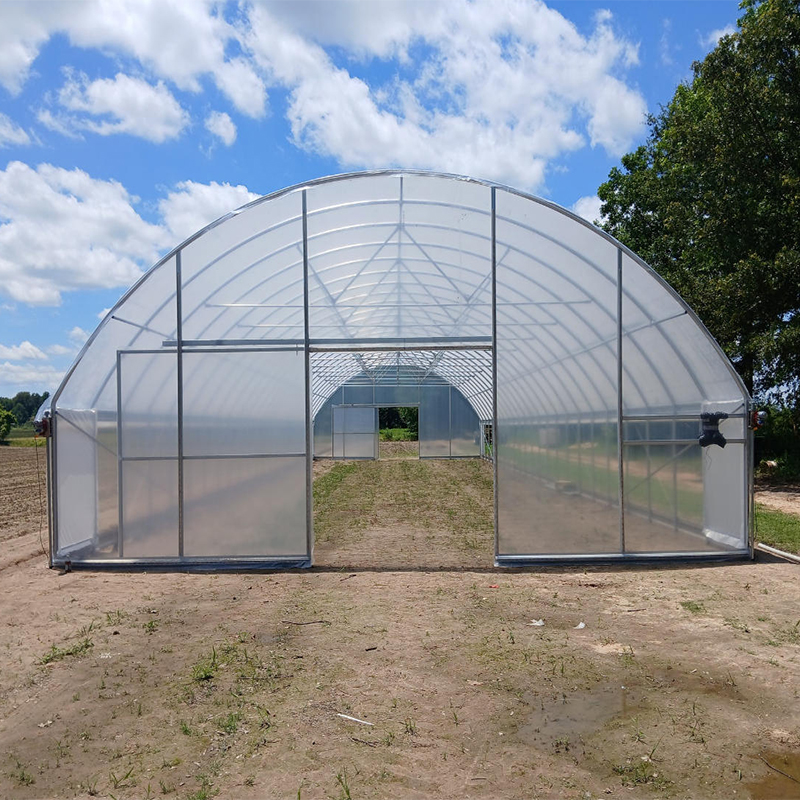
High winds are the "number one killer" of greenhouse physical integrity, and their destructive power is often total. Wind resistance is a core indicator of a greenhouse's quality and longevity.
1. Structural Design is Fundamental: A Strong "Skeleton"
Scientific Wind Load Calculation:
Professional greenhouse companies begin design with structural calculations based on the maximum wind pressure (e.g., a 1-in-50-year event) for the project location. This determines the specifications, wall thickness, and material strength of all components—posts, trusses, and purlins. "Guesstimation" is not an option.
Sound Overall Structure and Foundation:
A streamlined roof profile helps reduce wind resistance. All structural steel connections should use high-strength bolts rather than simple welding, ensuring overall flexibility and strength. Furthermore, deep and robust isolated or continuous foundations are the bedrock that allows the entire greenhouse to "stand its ground."
2. Daily Management and Emergency Response:
Retract and Secure:
Upon receiving a high-wind warning, it is crucial to immediately retract all movable equipment like shade nets and thermal screens to prevent them from acting like sails and causing structural failure.
Inspection and Maintenance:
Regularly inspect the fastening of cladding materials and promptly replace aged lock channels or seals to prevent wind from finding a weak point and "ripping" the greenhouse open.
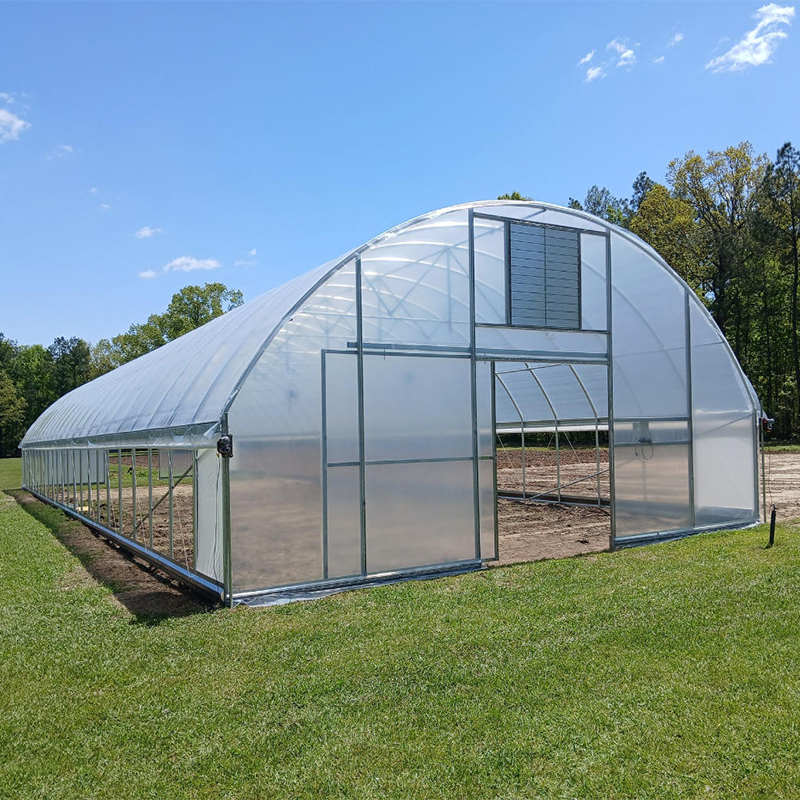
Extreme weather is no "Black Swan" event; it's the new normal—the "Gray Rhino" charging at us. Piecemeal solutions are inadequate. The real solution lies in building an all-weather, controllable agricultural production system, founded on robust structures, intelligent equipment, and data-driven algorithms.
You need more than just a shelter from the rain; you need an "Intelligent Agricultural Space" that can actively sense, intelligently analyze, and precisely execute. This requires interdisciplinary knowledge, mature product systems, and rich project experience.
We, Kunyu Greenhouse, are experts in this very field.
We specialize in providing clients with end-to-end modern greenhouse solutions, from planning and design to construction and operational support. We understand the nature of each extreme weather event and integrate countermeasures into every design detail:
Our structural engineers calculate for the most demanding wind and snow loads.
Our environmental control experts tailor the most efficient cooling and heating strategies for you.
Our smart control team equips your greenhouse with the most responsive and reliable "cloud brain."
End the frustration of "farming by the heavens" by investing in a truly modern greenhouse. If extreme weather challenges your operations, or if you are planning a new, high-yield agricultural project, contact us today. Our expert team is ready to provide you with a customized "Extreme Weather Protection Plan" tailored to your local climate and crops, helping you move forward with confidence and secure your future.

Copyright ©Kunyu Greenhouse Co., Ltd. All Rights Reserved | Sitemap