
Introduction: More Than Just a Cover – It's Key to Your Greenhouse's Success
When planning or upgrading a greenhouse, choosing the covering is often one of the largest and most confusing investments. It is far more than a simple "cover"; it is the core of your greenhouse's ecosystem. It determines how sunlight enters, how heat is retained, how humidity is maintained, and ultimately, the yield and quality of your crops. A wrong choice can lead to skyrocketing energy bills, poor crop growth, or even premature, expensive replacement.
Therefore, before deciding between glass, polycarbonate, or plastic film, ask yourself a fundamental question: What is the primary goal of my greenhouse? Is it for high-value flower production? Year-round vegetable growing? Or just for seasonal seedling propagation and extending the growing season? The answer will directly guide you to the ideal covering solution.
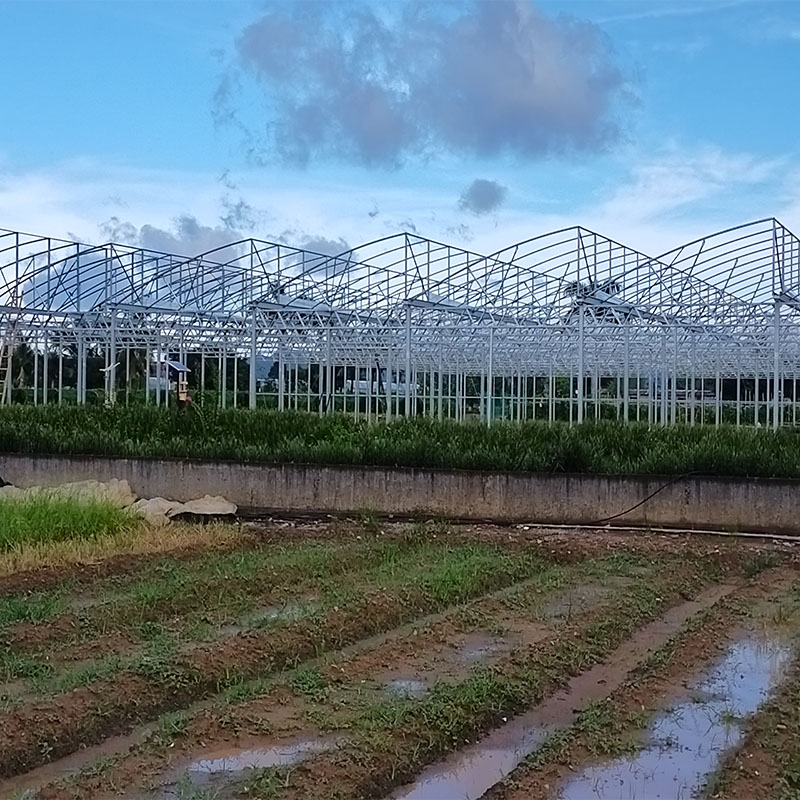
We will start with the three most common materials, detailing their pros and cons.
1. Glass – The Epitome of Classic & High Light Transmission
Characteristics: As the most traditional covering material, glass is known for its unparalleled light transmission and classic appearance.
Advantages:
Superior Light Transmission: Highest initial light transmission (can exceed 90%), with no significant degradation over time, providing the most stable light source for light-loving crops.
High Durability: High surface hardness, scratch-resistant, and chemically stable, resistant to corrosion from pesticides or fertilizers.
Easy Maintenance: Smooth surface, not prone to dust accumulation, easily cleaned by rain. Easy to replace if a single pane breaks.
Disadvantages:
Poor Insulation: High thermal conductivity, making it the least insulating of the three options, leading to high heating costs in winter.
Low Impact Resistance: Fragile and vulnerable to damage from hail, falling debris, and other impacts.
Heavy & Complex Installation: Requires a very sturdy (and often more expensive) greenhouse frame structure for support.
High Initial Cost: Both material and installation costs are the highest.
2. Polycarbonate Multi-Wall Sheets – The Modern, Balanced Performer
Characteristics: This is an engineering plastic, typically formed into double or multi-wall hollow structures, offering an excellent balance between insulation, impact resistance, and light weight.
Advantages:
Excellent Thermal Insulation: The hollow structure creates an insulating air layer, providing 2-3 times better insulation than single-pane glass, significantly reducing winter energy consumption.
High Impact Strength: Over 200 times more impact-resistant than glass, effectively withstanding hail and accidental impacts.
Lightweight & Sturdy: Much lighter than glass, reducing the load on the frame, while offering high structural strength.
Good Light Diffusion: The sheets convert direct light into soft, diffused light, reducing crop scorching and promoting overall, uniform growth.
Disadvantages:
Light Transmission Degradation: Initial light transmission is close to glass, but prolonged UV exposure causes gradual aging and yellowing, leading to a slow decline in transmission.
Condensation Management Required: Condensation can form on the inner walls, so versions with anti-drip coatings are necessary to prevent water droplets from harming crops.
Mid-Range Cost: Initial cost is higher than film but typically lower than glass (considering structure and installation).
3. Plastic Film – The Economical & Flexible Choice
Characteristics: Mainly PE (Polyethylene) film and its upgraded version, PO (Polyolefin) film. Widely used in various greenhouses due to very low cost and easy installation.
Advantages:
Very Low Initial Cost: The lowest material and installation cost, offering a low investment barrier.
Excellent Flexibility: Ideal for arched and gutter-connected greenhouses, allowing for quick installation.
Extremely Lightweight: Places the lowest demands on the greenhouse frame.
Disadvantages:
Shortest Lifespan: Standard PE film lasts only 1-2 years; UV-resistant PO film can last 3-5 years. Requires periodic replacement, potentially creating hidden long-term costs.
Moderate Insulation: Single-layer film offers poor insulation, but using double-layer inflated film can significantly improve thermal performance.
Prone to Dust and Condensation Dripping: The inner surface is prone to condensation droplets, which reduce light transmission and increase disease risk. The outer surface collects dust and requires regular cleaning.
For a more intuitive comparison, see the table below:
| Feature | Glass | Polycarbonate Multi-Wall Sheets | Plastic Film (PO) |
|---|---|---|---|
| Initial Light Transmission | >90% (Best) | 80%-90% (Excellent) | 85%-95% (Excellent) |
| Light Transmission Retention | Excellent (Stable) | Good (Slowly degrades) | Poor (Degrades faster) |
| Thermal Insulation | Poor | Excellent | Fair (Good with double-air layer) |
| Impact Strength | Poor | Excellent | Good |
| Expected Lifespan | 20+ Years (Virtually Permanent) | 10-20 Years | 3-5 Years |
| Initial Cost | High | Medium | Low |
| Maintenance Needs | Low | Medium | Medium-High (Replacement) |
| Weight | Heavy | Medium | Light |
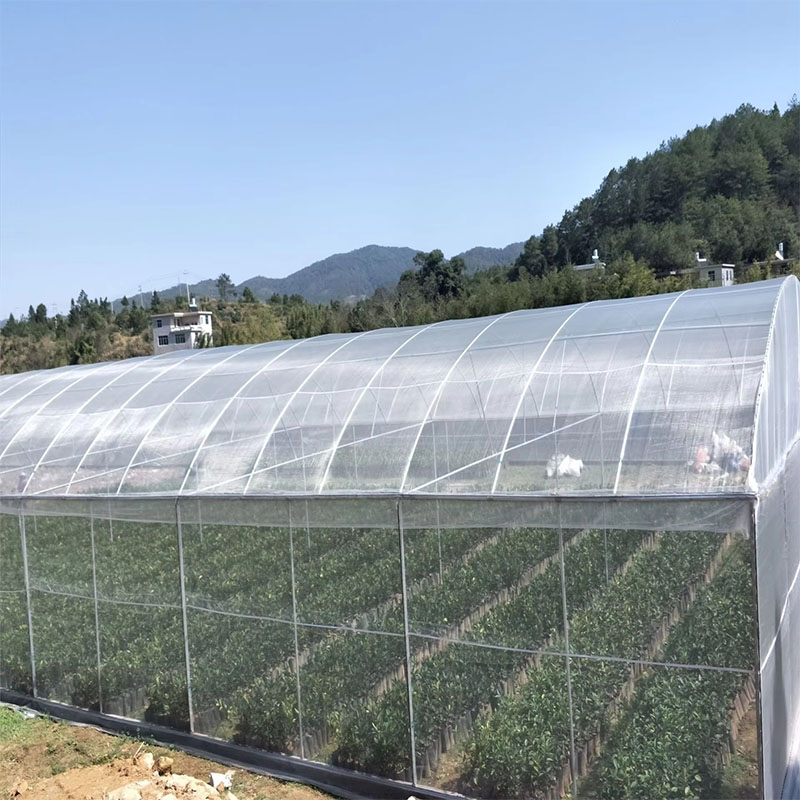
Now, match the material properties above with your actual needs. Answer the following questions, and the right choice will become clear.
1. What is your local climate like?
Cold/Long Winter Regions: Insulation is the top priority. Polycarbonate multi-wall sheets are the best choice for significant heating cost savings. Next is double-inflated plastic film.
Hot/High Solar Radiation Regions: Need to consider heat dissipation and shading. Both glass and polycarbonate are options, but they must be paired with good ventilation and shading systems. The stability of light transmission is key here.
Windy/Hail-Prone Regions: Impact resistance is critical. Polycarbonate sheets win due to their exceptional toughness. Plastic film can tear easily in strong winds.
2. What are you growing?
High-Light Crops (e.g., Tomatoes, Cucumbers, Roses): Need stable, high light levels. Glass is ideal, followed by high-transmission polycarbonate sheets.
Diffused-Light Preferred Crops (e.g., Lettuce, Some Orchids): Polycarbonate sheets are perfect due to their innate light-diffusing properties, promoting even growth and preventing leaf burn.
Common Leafy Greens or Short-Term Crops: Not extremely demanding on light quality, more focused on cost-effectiveness. High-quality PO film is sufficient and economical.
3. What is your budget?
Ample Budget, Seeking Permanence: Choose Glass. It's a one-time investment that pays off long-term.
Medium Budget, Seeking Value & Performance Balance: Polycarbonate sheets are the undeniable champion, offering the perfect balance of lifespan, insulation, and cost.
Limited Budget, or for Short-Term/Seasonal Production: Plastic film is the most efficient solution, allowing you to start production quickly with the lowest upfront cost.
4. What is your greenhouse type and scale?
Large Venlo or Gutter-Connected Greenhouses: Suitable for Glass and Polycarbonate Sheets.
Arched Greenhouses, Sunlight Greenhouses: Plastic Film and Polycarbonate Corrugated Sheets (a single-layer option) are most common.
Small Home Garden Greenhouses: Polycarbonate Sheets (easy for DIY cutting/installation) and Glass are common choices.
Scenario 1: High-End Research Greenhouse/Botanical Garden
Recommendation: High-transparency Glass.
Reasoning: Provides the most stable and authentic light environment for research needs, with a majestic, permanent appearance.
Scenario 2: Year-Round Vegetable Production Greenhouse in Northern Regions
Recommendation: Double-Wall Polycarbonate Sheets.
Reasoning: Excellent insulation is key to profitability, effectively resisting severe cold and saving energy, while offering strong hail resistance.
Scenario 3: Seasonal Seedling Propagation or Standard Vegetable Growing
Recommendation: High-Quality PO Film (recommended with double-air inflation technology).
Reasoning: Highest cost-effectiveness, meets basic production needs, and offers a fast return on investment.
Scenario 4: Specialty Crops Requiring High Light Uniformity (e.g., Microgreens, Edible Fungi)
Recommendation: Diffused Light Polycarbonate Sheets.
Reasoning: Creates a shadow-free, uniform light environment, enhancing overall crop quality and consistency.
Conclusion: Make a Smart Long-Term Investment
Choosing a greenhouse covering has no single "best" option, only the "most suitable" one. It is a fundamental decision that affects your agricultural operations for years, even decades to come. We strongly recommend using this article as a reference framework and considering it in depth alongside your project's specific details.
Kunyu Greenhouse, as a professional provider of agricultural greenhouse solutions, not only supplies a variety of high-quality covering materials but is also committed to providing comprehensive technical consulting and customized design services. If you are still hesitating between several options, please contact our expert team immediately. We will tailor the optimal greenhouse covering solution based on your specific location, planting plans, and budget, helping your agricultural venture get off to a solid start.

Copyright ©Kunyu Greenhouse Co., Ltd. All Rights Reserved | Sitemap