
As autumn deepens and the north wind howls, a critical question emerges for every greenhouse grower: How do you heat a greenhouse in winter efficiently and economically? Low temperatures and insufficient sunlight are the biggest challenges for greenhouse production during winter, directly impacting plant survival, growth cycles, and ultimate yield. Whether you're protecting delicate ornamentals or ensuring a continuous supply of off-season vegetables, a reliable heating system is key to your success.
As experts with years of experience in the agricultural greenhouse industry, we understand your pain points: Worries about high energy costs, fears of system failure during extreme weather, uncertainty about the best solution for your local climate... Today, we will systematically address these questions, providing a full spectrum of solutions from simple, low-cost methods to modern, smart-controlled systems.
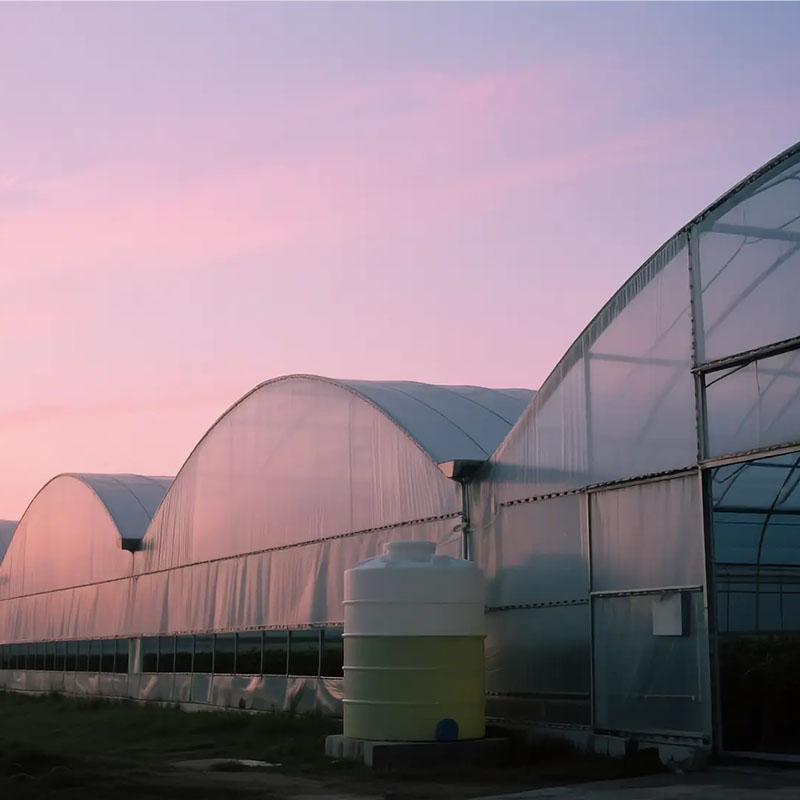
Before diving into specific solutions, let's define the goal: Greenhouse heating isn't just about raising the temperature as high as possible; it's about maintaining a stable, even temperature environment that meets crop needs while minimizing energy consumption and operating costs. The main challenges are:
Heat Loss: Through the covering material (glass or film) via conduction, through ventilation air exchange, and through heat conduction into the ground.
Energy Costs: Traditional fossil fuel prices fluctuate, and electric heating can be expensive to run.
Temperature Fluctuations: Significant day-night temperature swings require a responsive heating system with precise control.
We've divided the solutions into "Passive Heating" and "Active Heating" categories. You can use them individually or in combination based on your situation.
Solution 1: Passive Solar Heat Storage (Low-Cost / Supplemental)
This is the oldest and most economical method, focusing on collecting and storing solar energy during the day for release at night.
How it works: Utilizes thermal mass like water barrels, rock beds, or specialized phase-change materials. These materials absorb heat during sun exposure and act as natural "radiators" when temperatures drop at night.
Pros: Nearly zero operating cost, eco-friendly, energy-saving, simple to implement.
Cons: Relies entirely on sunlight; effectiveness is limited during prolonged cloudy periods or in extremely cold climates. Best used as a supplement.
Best for: Small home greenhouses, simple greenhouses in sunny regions, or as supplemental heating for larger greenhouses.
Solution 2: Hot Water/Pipe Heating (Stable & Even)
A traditional yet highly effective method, common in large glasshouses.
How it works: Water is heated by a coal, gas, or biomass boiler and then pumped through a network of pipes running along the floor or around plants, heating the space via radiation and convection.
Pros: Extremely even temperature distribution, very stable, good thermal inertia (prevents sudden temp shifts), relatively quiet operation.
Cons: High initial investment, complex system installation, boilers require specialized maintenance.
Best for: Large venlo-type greenhouses, flower nurseries, research greenhouses—any application where temperature stability is paramount.
Solution 3: Hot Air Heating (Unit Heaters) (Flexible & Efficient)
A very widely used method, especially in modern film greenhouses.
How it works: Oil, gas, or electric unit heaters directly heat air, which is then distributed throughout every corner of the greenhouse via perforated polyethylene ducting. Large fan heaters can also be used for localized air circulation.
Pros: Lower initial investment, flexible installation, fast warm-up times, easy to automate.
Cons: Temperature uniformity can be slightly less consistent than hot water systems, can dry the air, produces some operating noise.
Best for: Various large, medium, and small greenhouses, particularly vegetable greenhouses with short growth cycles requiring quick warm-up.
Solution 4: Radiant Heating (Directed & Precise)
Similar to a "space heater," it heats objects directly via radiation.
How it works: Gas-fired radiant tubes or electric infrared heaters are installed overhead. They emit infrared radiation towards the ground and plants, directly heating the soil, pots, and plants themselves rather than heating the air first.
Pros: Heat is delivered directly to crops, high efficiency, no dust circulation, doesn't dry the air, good for zone heating.
Cons: Can create significant vertical temperature gradients (warmer upstairs, cooler downstairs), high initial cost.
Best for: Greenhouses with high ceilings, livestock barns, or areas requiring zone heating.
Solution 5: Geothermal Heating (Green & Sustainable)
Utilizes the earth's constant deep-ground temperature, a highly promising clean energy source.
How it works: A ground-source heat pump system extracts heat from the ground in winter to heat the greenhouse via a fluid circuit. In summer, it can reverse to dump excess heat from the greenhouse into the ground, providing cooling.
Pros: Very high coefficient of performance (COP), extremely energy-efficient, environmentally friendly, low operating costs, provides both heating and cooling.
Cons: Highest initial investment cost of all options, requires site geological surveys and significant excavation/work.
Best for: Large modern farms or agricultural parks with long-term plans, focusing on sustainability and long-term ROI.
Solution 6: Electric Heating (Supplemental & Precise)
Uses electricity directly for heating in various forms.
How it works: Includes electric fan heaters, soil heating cables (for benches or soil), and electric radiators.
Pros: Easy installation, precise control, zero emissions on-site, simple maintenance.
Cons: Highest direct operating cost, completely reliant on electricity supply (a risk in areas with unstable power or high costs).
Best for: Supplemental heating (e.g., under-benchtop warming), small greenhouses, or areas with reliable and cheap electricity.
Solution 7: Insulation & Energy Management ("Heating" by Not Losing Heat)
The best energy is the energy you save. Proper insulation can directly reduce heating needs by 30%-50%.
Key Measures:
Double Layer Glazing/Film: Using double layers with an air gap in between provides excellent insulation.
Thermal Screens/Blankets: Automated retractable screens deployed inside the greenhouse at night significantly reduce upward heat loss.
Sealing: Ensure all greenhouse seams, doors, and windows are properly sealed to eliminate drafts.
Insulated Perimeter Foundation: A trench filled with insulation around the greenhouse perimeter reduces horizontal heat loss through the soil.
There's no single "best" solution, only the "most suitable" one. Consider these four factors:
Local Climate Conditions:
Cold Regions/Extreme Lows: Prioritize hot water systems or robust hot air systems, combined with double glazing and thermal screens. Geothermal is ideal but expensive.
Milder Regions: Unit heaters, passive solar, or a combination might be sufficient.
Greenhouse Size & Type:
Small Hobby Greenhouse: Focus on passive mass, electric supplemental heat, and excellent insulation.
Large Production Greenhouse: Requires a professional heat load calculation. Centralized hot water or hot air systems are standard.
Crop Requirements:
Temperature-Sensitive Seedlings/Premium Flowers: Require the high stability of hot water systems or geothermal.
Standard Leafy Greens: Unit heater systems can often suffice, offering good value.
Budget Constraints:
Limited Initial Budget: Start with unit heaters and maximize insulation management.
Focused on Long-Term Operating Costs: Invest in geothermal or biomass boilers. Higher upfront cost is offset by future fuel cost advantages.
Winter greenhouse heating is a systematic project. The secret to success lies in combining "supply" and "conservation": choosing efficient and reliable heating equipment (supply) while minimizing heat loss through excellent greenhouse design and insulation measures (conservation).
We highly recommend: Consulting with a professional greenhouse company before building or retrofitting a greenhouse. A professional heat load calculation will precisely determine how much heat your greenhouse needs during the coldest weather, allowing us to recommend the most suitable equipment size and configuration, avoiding an underpowered system or wasted investment.

Copyright ©Kunyu Greenhouse Co., Ltd. All Rights Reserved | Sitemap